Moths vs. Butterflies: What's the Difference?
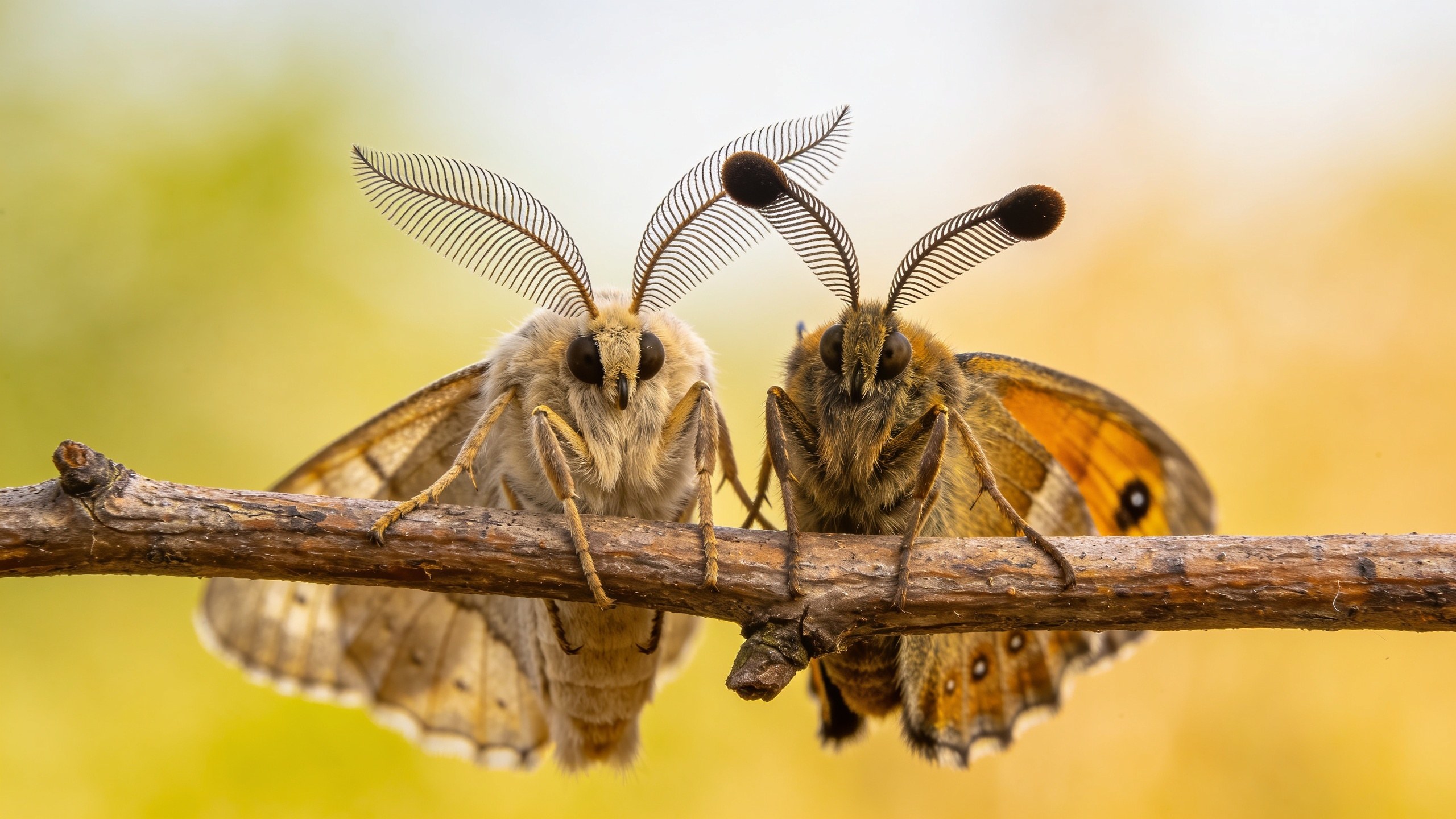
Moths and butterflies both belong to the order Lepidoptera and share the same basic four-stage life cycle, which is exactly why telling them apart isn't always obvious at a glance. A few reliable clues do the trick, though.
Antennae
This is the most reliable test: butterflies have slender antennae that end in a small club or hook, while moths have feathery or plain thread-like antennae with no club at the tip. If you can get a close look at the antennae, you can usually settle the question immediately.
Activity: Day vs. Night
Most butterflies are diurnal, active during the day, while most moths are nocturnal and drawn to light at night — hence "moths to a flame." This isn't a hard rule, though: some moths, like the hummingbird hawk-moth, fly by day, so it's a helpful clue rather than a guarantee.
Resting Wing Position
The Cocoon vs. Chrysalis
Butterfly caterpillars form a smooth, hard chrysalis with no silk covering, while many moth caterpillars spin a silk cocoon around themselves before pupating — though this varies by species, and it's a supporting clue rather than a universal rule.