
Atlas Moths
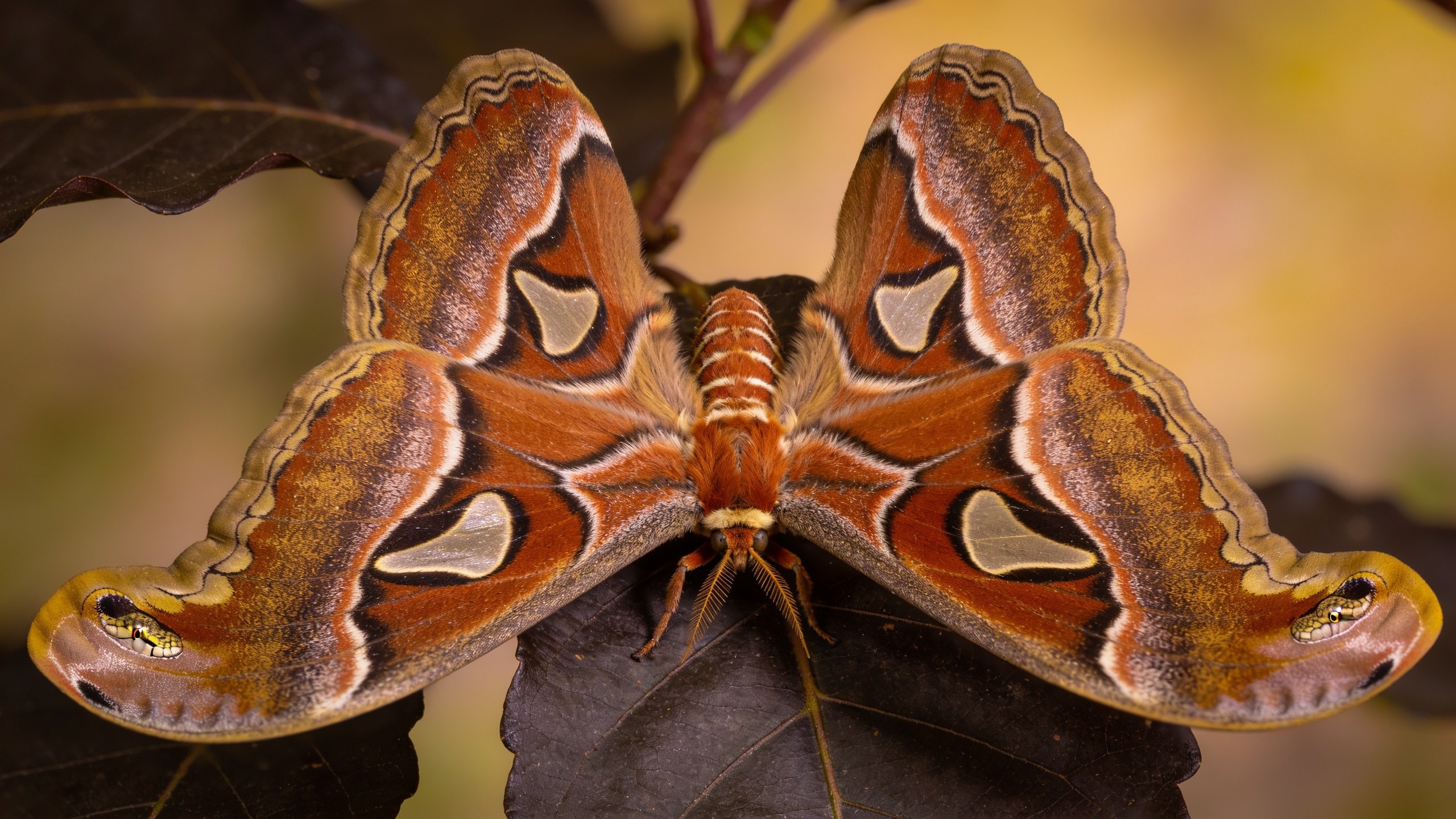
The Atlas moth (Attacus atlas) is one of the largest lepidopterans in the world by wing surface area, native to the tropical and subtropical forests of Southeast Asia. Its size alone makes it one of the most striking members of the order Lepidoptera — the same order butterflies belong to.
Size and Appearance
Atlas moths can reach a wingspan of up to 10-12 inches, with wing surface area among the largest of any moth or butterfly species. Their reddish-brown wings carry large, transparent, triangular windows and patterned tips at each forewing that closely resemble a snake's head — an effective deterrent against birds and other predators.
A Short Adult Life
Adult Atlas moths have no functional mouthparts and cannot eat at all — they live entirely off fat reserves stored during the caterpillar stage, surviving only one to two weeks as adults. Their brief adult life is devoted entirely to mating and, for females, laying eggs before their energy reserves run out.
Silk Production
In parts of Taiwan, Atlas moth cocoons have historically been used to produce a coarse, durable silk known as fagara silk — harvested after the moth has emerged, unlike traditional silkworm silk, which is typically harvested before emergence.