Monarch Butterflies
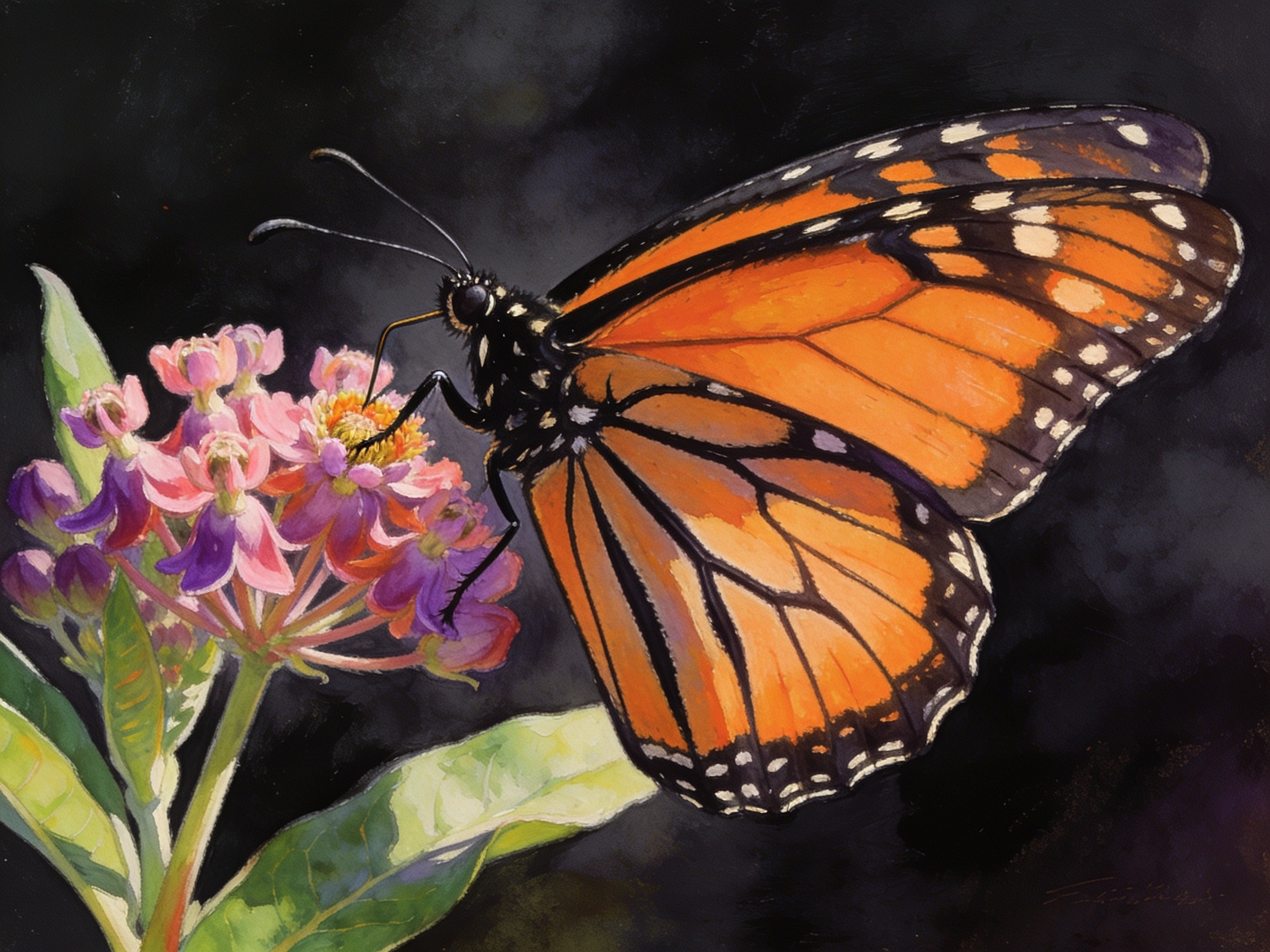
The monarch (Danaus plexippus) is the most recognizable butterfly in North America — bright orange wings laced with black veins and a white-spotted black border — and the only butterfly known to make a two-way migration like birds do.
The Migration
Eastern monarchs travel up to roughly 3,000 miles each fall from as far north as Canada to overwintering forests in central Mexico's Oyamel fir groves, while western populations winter along the California coast. No single butterfly makes the round trip — the journey south is completed by a long-lived "super generation" that can survive eight months or more, several times longer than the two-to-six week lifespan of a typical summer monarch.
Milkweed Dependence
Monarch caterpillars eat exclusively milkweed, and adults lay their eggs only on milkweed plants. Milkweed contains toxic compounds called cardenolides, which caterpillars store in their bodies — making both the caterpillar and adult butterfly poisonous enough to deter most predators, and giving the monarch its warning-colored orange and black pattern.
Population Decline
Eastern monarch populations have dropped sharply over recent decades, driven largely by the loss of milkweed habitat along migration corridors, along with deforestation at Mexican overwintering sites and pesticide use. Planting milkweed and pesticide-free nectar sources at home is one of the more direct ways a home gardener can support the species.
A Mimic, Too
The viceroy butterfly closely mimics the monarch's coloring — a form of mutual protection known as Müllerian mimicry, since both species are unpalatable to predators, so a predator that learns to avoid one pattern avoids both.