The Butterfly Life Cycle
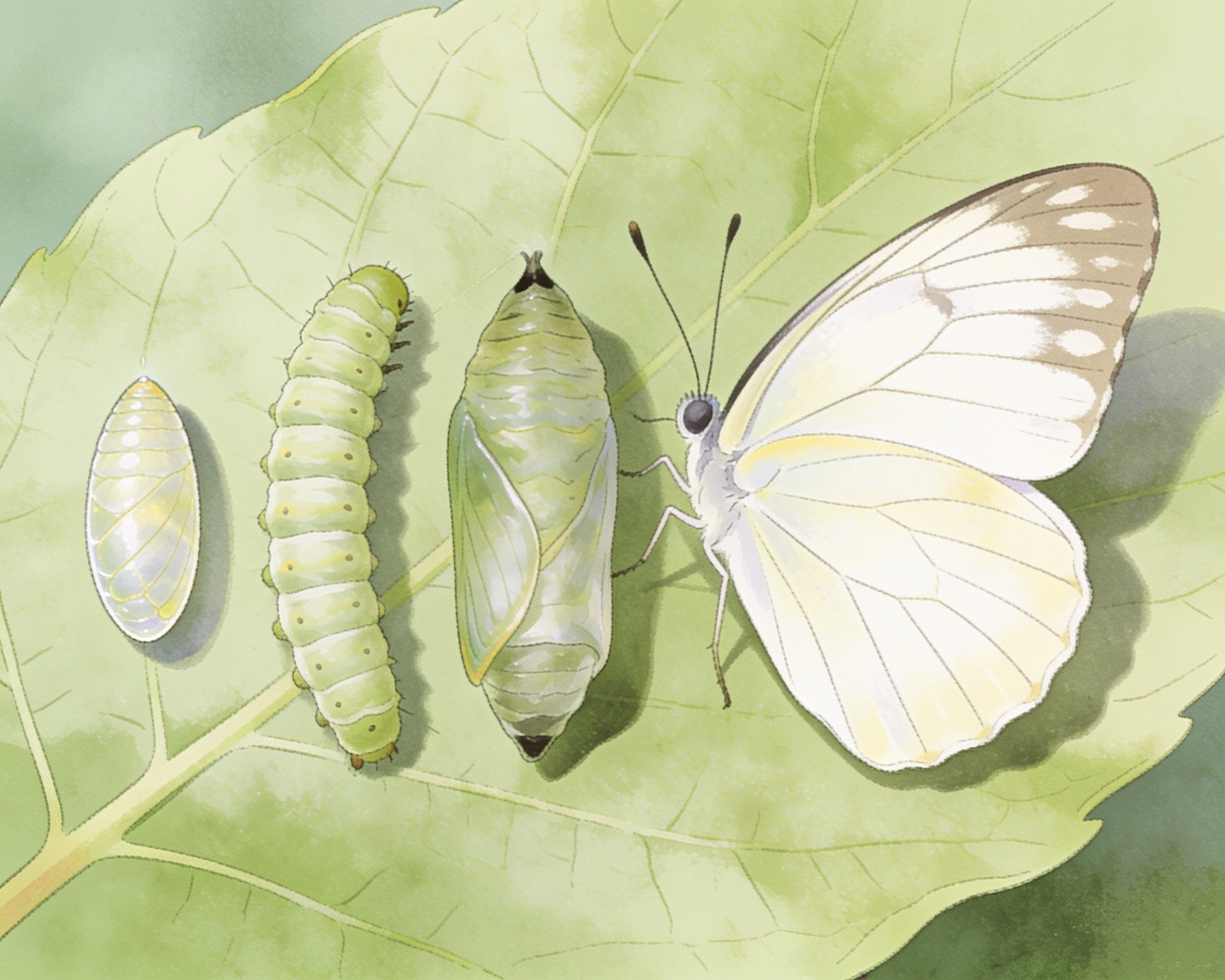
Every butterfly goes through complete metamorphosis — four distinct stages, each looking nothing like the one before it. From a speck of an egg to a free-flying adult, the whole process can take anywhere from a month to a year, depending on the species and the weather.
Egg
A female butterfly lays her eggs directly on a host plant — the exact species her caterpillars will need to eat once they hatch. Eggs are tiny, often ribbed or patterned, and glued to the underside of a leaf where they're harder for predators to find. Most hatch within a few days to two weeks.
Caterpillar (Larva)
The caterpillar's entire job is to eat and grow. It molts — shedding its skin — several times as it outgrows itself, each stage between molts called an "instar." A caterpillar can increase its body mass thousands of times over before it's done, all fueled by the host plant its mother chose. Some species, like the monarch, feed exclusively on one type of plant (milkweed) and nowhere else.
Chrysalis (Pupa)
Once fully grown, the caterpillar attaches itself to a stem or leaf and forms a hard outer case called a chrysalis. Inside, its body undergoes one of nature's most dramatic transformations: most of its tissue breaks down into a kind of cellular soup, which then reassembles — using clusters of cells called imaginal discs — into the wings, legs, and body of an adult butterfly. This stage can last anywhere from a week to several months, including overwintering in colder climates.
Adult Butterfly
How Long Does It Take?
Timing varies widely: some species complete the full cycle in as little as a month during warm weather, while others — especially those that overwinter as a chrysalis — take nearly a year. Monarchs are unusual in that several generations are born and die over a single migration season, with only the final "super generation" living long enough to make the full return trip to Mexico.